

































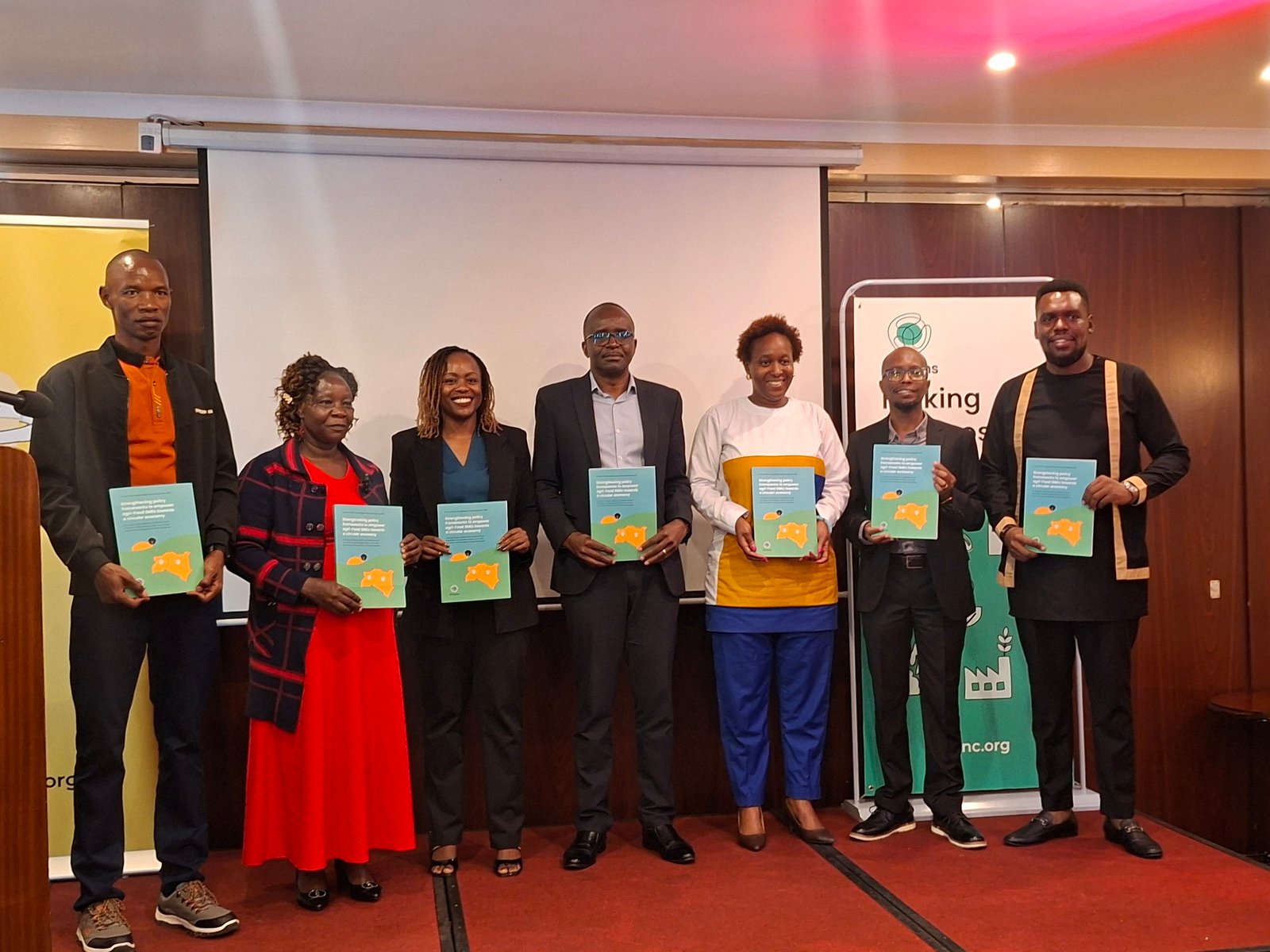
A new policy brief by the O-Farms Project has highlighted both progress and persistent challenges in Kenya’s transition toward a circular economy in agri-food systems, with small and medium enterprises (SMEs) facing significant barriers to full participation.
The report, titled “Strengthening policy frameworks to empower agri-food SMEs towards a circular economy in Kenya,” examines policy enablers and constraints affecting SMEs engaged in zero-waste and circular economy products. The O-Farms Project, a regional initiative, aims to accelerate circular food systems in East Africa by supporting enterprises that reduce food loss and waste.


The findings show that while Kenya has made notable strides in policy development, including frameworks such as the Sustainable Waste Management Act (2022), Extended Producer Responsibility Regulations (2024), and the Green Economy Strategy, implementation remains uneven, particularly for SMEs.
ALSO READ: WATER SUPPLY DISRUPTIONS HIT EASTERN ACCRA
Speaking at the policy brief launch on April 28, 2026, Bopinc Country Director, Beryl Oyier, acknowledged the progress but stressed accessibility gaps. “Despite this evolving policy landscape, only 18 percent of SMEs report familiarity with prevailing circular economy laws, evidencing an enormous policy-implementation gap,” she said.
The study, based on surveys of 45 SMEs and consultations with 26 stakeholders, revealed deep operational constraints. About 93 percent of SMEs reported difficulty accessing stable markets, while 80 percent rely on word-of-mouth for customer acquisition and 64 percent sell directly from production sites. Certification processes were flagged as a major barrier, with 78 percent describing them as costly, complex, and largely centralized in Nairobi, limiting access for businesses in other regions.
Access to finance remains another major hurdle, with 60 percent of SMEs identifying it as a key challenge, while 63 percent cited limited access to appropriate production technologies. Additionally, 56 percent of respondents said they are unaware of policies designed to support their participation in circular economy markets.
Senior Inclusive Business Advisor at Bopinc, Jackson Kinyanjui, noted that inconsistencies between national and county regulations further complicate operations. “This increases administrative complexity and raises operational costs. It can also introduce uncertainty for businesses seeking to expand or replicate their models across locations,” he said, adding that awareness and implementation support have not kept pace with policy development.
Acting CEO of Biovision Africa Trust, Frederick Ochieng, warned of broader implications if SMEs remain excluded. “When SMEs are unable to participate effectively in circular economy markets, food loss continues at scale. This contributes to greenhouse gas emissions and leads to inefficient use of water and land resources,” he said. He added that it also limits income for farmers, reduces value across local communities, and weakens job creation in circular agri-food innovation. “As a result, Kenya’s green growth agenda loses its most powerful delivery mechanism—the entrepreneurs and small enterprises operating at the heart of the food system,” he added.
Also speaking, Senior Program Manager at Bopinc, Ebenezer Amadi, emphasised the need to bridge the gap between policy and practice. “What we are seeing in Kenya is that SMEs are already innovating, turning waste into value and building markets, often through informal channels. The challenge is not a lack of effort but navigating systems that are complex and not always well understood,” he said.
He noted that the priority now is to make systems more practical through clearer guidance, assisted compliance, and targeted support to help SMEs meet certification requirements.
The policy brief recommends improving access to tailored financing, increasing awareness among consumers and policymakers through targeted campaigns and product labelling, and strengthening SME understanding of existing policies and standards.
Despite policy progress, the report concludes that unlocking the full potential of Kenya’s circular economy will depend on closing the gap between regulatory frameworks and the everyday realities faced by SMEs.