
































The Ghana Institute of Architects (GIA) has called on the government to review local government laws to empower Metropolitan, Municipal, and District Assemblies (MMDAs) to play a more proactive role in inspecting construction sites and enforcing building standards across the country.
Architect Kofi Owusu, President of the GIA Northern Chapter, said strengthening the supervisory role of MMDAs would ensure the use of quality construction materials, reduce the risk of building failures, and promote sustainable construction practices nationwide.

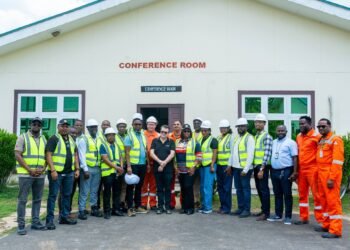
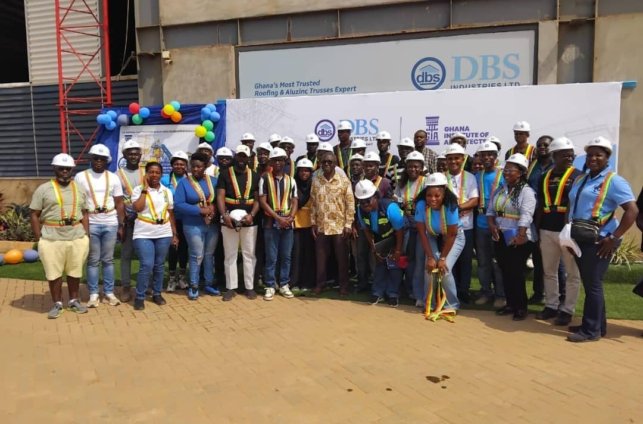
He made the call during a facility tour of the DBS Industries plant at Kotwi-Nkoransa in the Atwima Kwanwoma District of the Ashanti Region, where he led a delegation of more than 70 architects to inspect the company’s evolving production lines.
Speaking in an interview with Adom News, Mr Owusu stressed that effective monitoring and strict enforcement of building codes would help minimise disasters such as building collapses linked to the use of substandard materials.
“Our proposal to the President is to empower MMDAs to monitor construction projects effectively and enforce building codes and standards. This will help minimise the occurrence of building collapses and other disasters associated with poor-quality materials,” he said.
ALSO READ: KENYA ALIGNS ACCREDITATION SYSTEMS WITH GLOBAL STANDARDS.
Mr Owusu also underscored the need to prioritise the use of locally sourced materials in construction projects. He observed that foreign contractors often secure government contracts but rely heavily on imported materials rather than sourcing locally.
According to him, promoting local sourcing would not only strengthen the local economy but also ensure architectural designs and materials are better suited to Ghana’s environmental conditions.
“We have seen that most expatriates come in and do the bulk of the work, but when it comes to sourcing materials, it will be better if the sourcing is largely local. Materials found within a locality are best suited for the architecture of that area,” he noted.
He added that enforcing policies that promote local material sourcing would help create a more sustainable built environment while supporting local businesses.
“We want the government to push for local sourcing from local companies so that we can build the best environment for our nation,” he said.
Mr Owusu also commended DBS Industries for its consistent production of high-quality construction materials tailored to the Ghanaian market, highlighting the company’s strong understanding of local environmental demands and its commitment to innovation.
Welcoming the delegation, the Deputy Managing Director of DBS Limited, Architect Nana Dr David Nyame-Tawiah, appealed to the government to provide targeted incentives and tax relief to industrial companies to boost production capacity and create jobs.
He said such measures would significantly contribute to addressing unemployment in the country.
“By offering tax waivers and incentives, the government can help industrial companies like DBS scale up production. Job creation cannot be done by government alone; supporting industries to expand will directly translate into more employment opportunities for Ghanaian youth,” he said.
Dr Nyame-Tawiah further noted that DBS is committed to a knowledge-exchange model that bridges academic theory and industrial practice, a collaboration he described as critical to ensuring structural integrity and sustainable development in Ghana’s construction sector.