











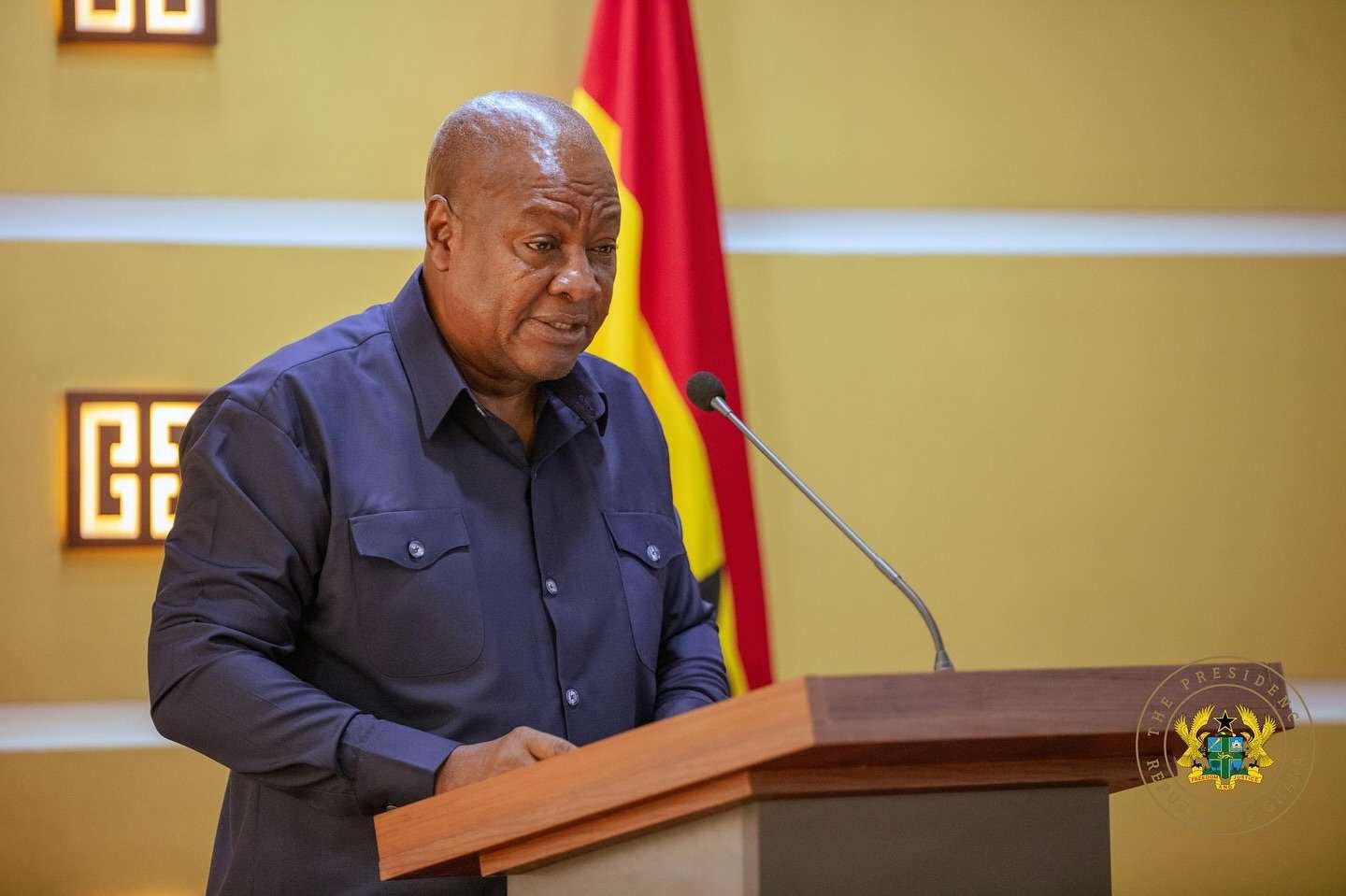
President John Dramani Mahama has urged Ghanaians to reject ill-gotten wealth and embrace integrity as the country advances its national “reset” agenda aimed at strengthening governance, rebuilding public trust, and promoting ethical leadership.
Speaking in a message to Ghanaians in the diaspora ahead of Ghana Independence Day on March 6, 2026, the President emphasized that sustainable national development requires not only policy reforms but also a transformation in societal attitudes toward wealth, leadership, and accountability.

According to him, the country’s progress depends on resetting values and redefining the relationship between leaders and citizens. He stressed that the celebration of wealth acquired through dishonest means undermines national development and weakens social integrity.
ALSO READ: EMPOWERING THE NEXT GENERATION: LUCY MUKIRI ANAMPIU’S IMPACT ON TECHNICAL EDUCATION
“Resetting Ghana is about resetting values, resetting expectations, and resetting the very relationship between leaders and the led,” Mahama said.
The President further warned that society must stop glorifying wealth obtained through dubious or unethical practices. He noted that true success should be measured not by material accumulation but by meaningful contributions to national progress.
“We must teach our children that integrity is non-negotiable; that wealth acquired through dubious means is a curse and not a blessing, and that true success is measured not by what we accumulate, but by what we contribute to national progress,” he added.
The address also highlighted the role of the Ghanaian diaspora in national development. Mahama encouraged Ghanaians living abroad to remain actively engaged in the country’s economic and social progress through investments, remittances, and advocacy for good governance.
The message aligns with the government’s broader reform agenda aimed at strengthening institutions, promoting transparency, and restoring public confidence in public administration.
This year’s 69th independence anniversary of Ghana has sparked renewed national conversations around governance, identity, and the shared responsibility of citizens in shaping the country’s future.