
































Nigeria has signed a bilateral agreement with Equatorial Guinea to deploy a new subsea fibre-optic cable aimed at expanding broadband capacity, strengthening digital communications, and enhancing cybersecurity cooperation across West and Central Africa.
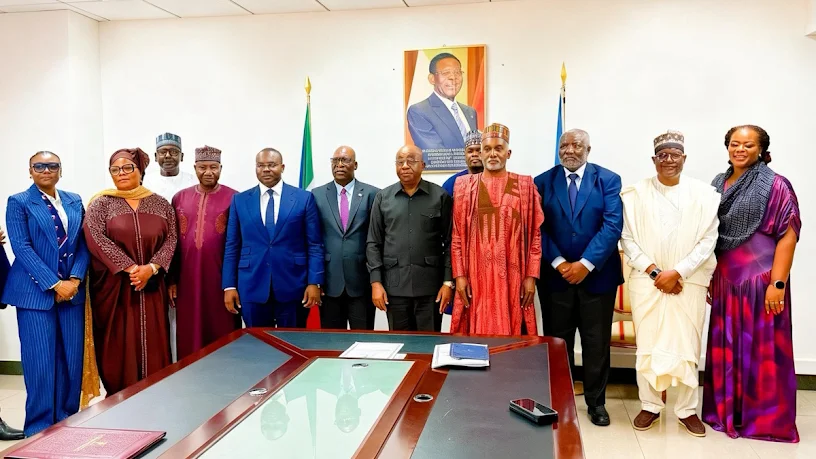
The agreement was confirmed by the Nigerian State House Media following a signing ceremony in Malabo.

Nigeria’s Minister of Foreign Affairs, Yusuf Tuggar, said the initiative builds on President Bola Ahmed Tinubu’s August 2024 visit to Equatorial Guinea, where both countries committed to deepening economic and digital cooperation.
ALSO READ: NIGERIA: FG UNVEILS INVESTMENT BUDGETING TO POWER $1 TRILLION ECONOMY DRIVE
According to Tuggar, the submarine cable will deliver high-capacity broadband connectivity critical to advancing regional integration, strengthening cross-border data security, and building future-ready digital infrastructure across Africa.
The partnership comes amid a broader push by African governments to lower internet costs and improve network reliability. Nigeria currently serves as one of Africa’s largest submarine cable landing hubs, with connections to at least seven international systems, including MainOne, Glo-1, Equiano, and 2Africa. Equatorial Guinea, in contrast, relies primarily on more limited connectivity, such as the Africa Coast to Europe (ACE) cable.
Industry data indicate that expanding submarine capacity can significantly reduce internet prices. A 2025 study by the Foundation for Studies and Research on International Development found that doubling international submarine capacity can cut fixed broadband costs by up to 32 percent and reduce mobile broadband prices by nearly 50 percent. The World Bank has similarly reported improvements in affordability and network resilience linked to such investments.
Officials say the new fibre link is expected to enhance redundancy, attract technology investments, and support rising demand for cloud services, fintech solutions, and e-government platforms across the region. However, detailed timelines and technical specifications for the project have yet to be disclosed
The agreement signals a strategic step toward strengthening digital infrastructure and positioning both countries to play a larger role in Africa’s expanding digital economy.