





























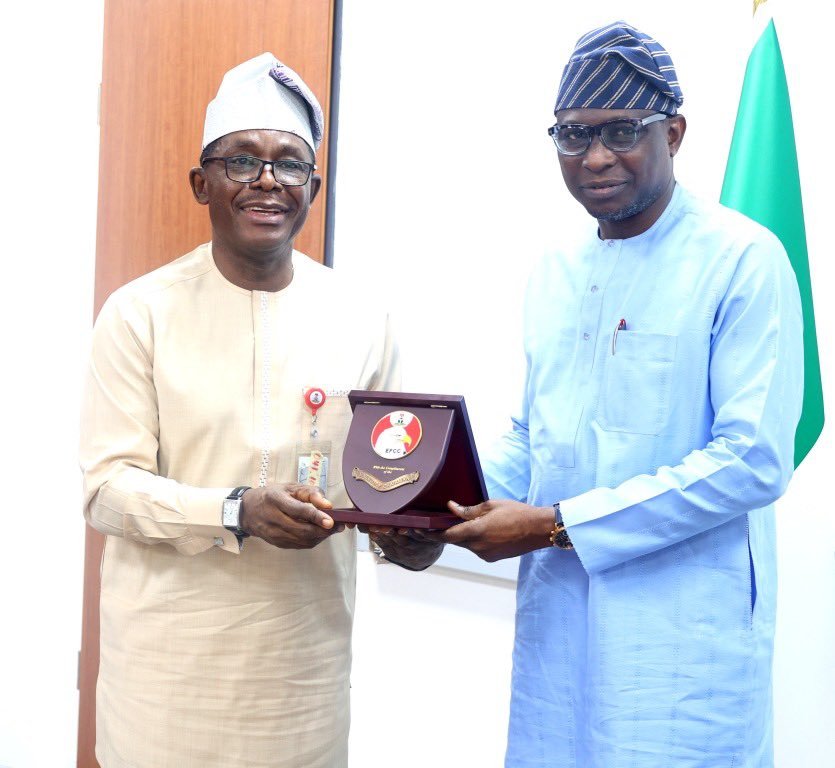
The Nigeria Deposit Insurance Corporation (NDIC) has called for enhanced collaboration with the Economic and Financial Crimes Commission (EFCC) to strengthen Nigeria’s financial system and improve enforcement outcomes within the banking sector.
This was disclosed on Friday, January 23, 2026, when the Managing Director and Chief Executive of the NDIC, Mr. Thompson Oludare Sunday, led a delegation of the Corporation’s management team on a courtesy visit to the Executive Chairman of the EFCC, Mr. Ola Olukoyede.

Speaking during the visit, Sunday said the engagement provided an opportunity to formally deepen institutional cooperation between both agencies. “We aim to further strengthen our collaboration, deepen institutional synergy and explore additional avenues for mutual support in the pursuit of national financial system stability. The EFCC has been our partner and we want this to continue. We look forward to an expanded and more impactful partnership between our two esteemed institutions.”
ALSO READ: KENYA PSC BACKS KAIZEN TRAINING TO DRIVE PRODUCTIVITY REFORMS IN PUBLIC SERVICE
He specifically requested that the NDIC leverage the EFCC’s technical expertise in asset tracing, recovery, and management, particularly in handling cases involving debtors of banks in liquidation.“Your experience has and will continue to greatly enhance our recovery efforts. Additionally, we have that strategic responsibility for prosecuting individuals whose actions contribute to the failure of banks. We therefore seek closer collaboration with the Commission in this critical area.”
In his response, EFCC Chairman Ola Olukoyede reaffirmed the long-standing relationship between the two agencies and pledged to further strengthen their collaboration. He described the NDIC and EFCC as “inseparable twins,” noting that both institutions have worked closely together for many years.
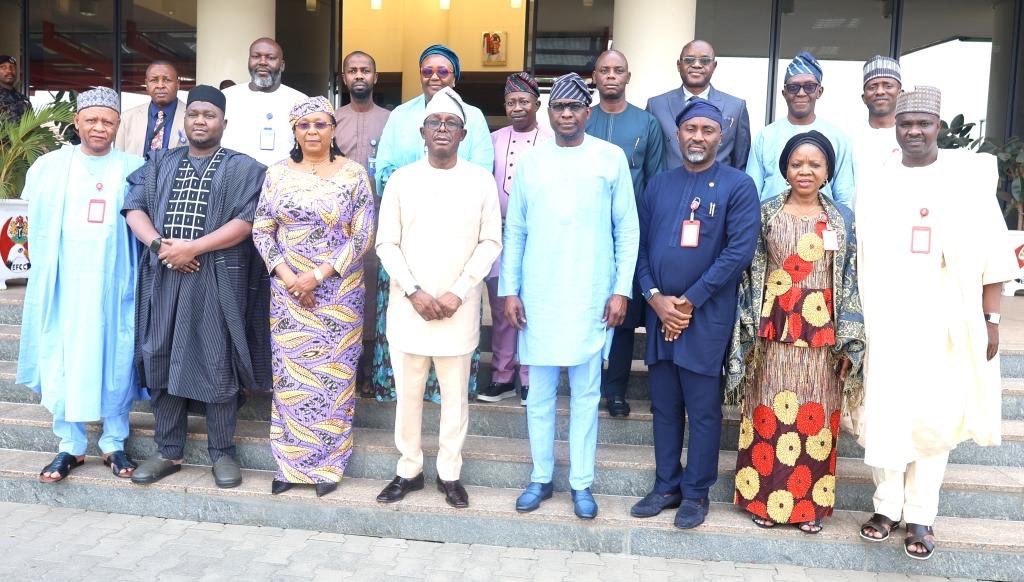
Olukoyede recalled that while the EFCC has consistently supported the NDIC in investigations, the NDIC has, in turn, supported the EFCC through capacity-building and training initiatives. ation, while the NDIC had been supporting the EFCC in the area of training. “So, there has been this mutually beneficial relationship between NDIC and EFCC and we never intend to stop. We’ll continue to take it to a higher level, and continue to strengthen it”, he said.
Speaking on the future direction of the collaboration, Olukoyede explained that his leadership philosophy at the EFCC prioritizes using the anti-corruption mandate to stimulate the Nigerian economy, strengthen productive institutions, and enhance the operational capacity of other government agencies.
He revealed that the EFCC had established a new department, the Fraud Risk Assessment and Control Department, aimed at proactively identifying and mitigating fraud risks before losses occur. According to him, the focus is no longer solely on recovering stolen funds, but also on preventing financial crimes through system strengthening and stakeholder collaboration.
Olukoyede emphasized that the NDIC remains a key stakeholder in cleaning up Nigeria’s financial ecosystem and assured the Corporation of the EFCC’s continued willingness to collaborate in designing fraud risk assessment frameworks and improving internal control processes across the financial sector.