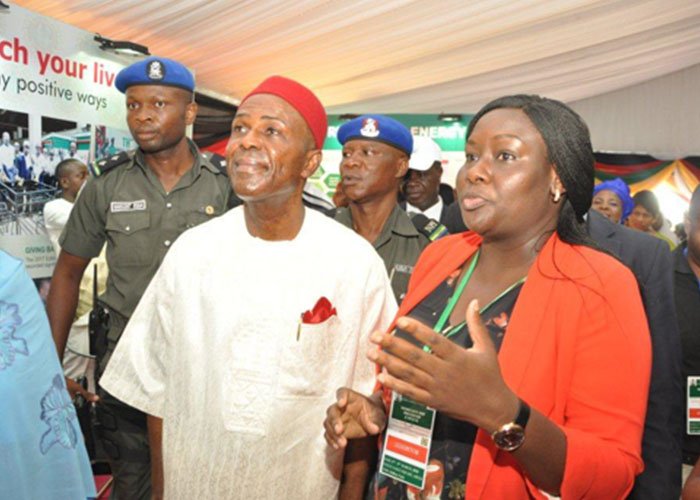


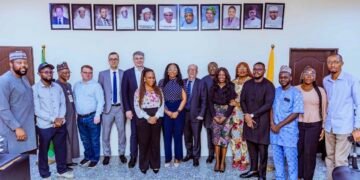































The Innovation Hub of the National Agency for Science and Engineering Infrastructure (NASENI) has concluded a three-day capacity-building training programme for staff drawn from the Agency’s institutes and centres across the country, aimed at strengthening the delivery of the FutureMakers Project.
The FutureMakers by NASENI initiative, for which applications are currently open, is a flagship programme designed to empower young Nigerians to identify and solve societal challenges through innovation. The initiative provides participants with financial support, structured training, and mentorship to transform ideas into practical, locally driven solutions.

The training programme, held from January 13 to 15, 2026, brought together 12 participants selected from NASENI institutes and centres across the six geo-political zones. It was structured to equip participants with innovative and facilitation skills, improve their ability to identify real-world problems, and support solution development using local resources. Participants were also trained to cascade the knowledge and methodologies acquired to other staff within their respective institutes and centres, ensuring system-wide impact.
Speaking after the programme, Engr. Dr. Tayo Adeyinka of the Prototype Equipment Development Institute (PEDI), Ilesa, and Mr. Woye Bernard Chibogwu of the Scientific Equipment Development Institute (SEDI), Enugu, expressed appreciation to NASENI for the opportunity to participate in the training. They noted that the programme had deepened their understanding of the FutureMakers Project and assured that the skills and insights gained would translate into improved project implementation and programme delivery at their respective institute.
ALSO READ: KENYA KAA TO REHABILITATE BOMET’S ITEMBE AIRSTRIP
In his remarks, Mr. Ahmed Hamza Ahmed of the Agricultural Machinery and Equipment Development Institute (AMEDI), Lafia, emphasised that the training provided critical insights into effectively engaging children, who are the primary beneficiaries and future drivers of the FutureMakers initiative. According to him, the knowledge gained will enable facilitators to communicate innovation concepts more effectively and inspire creativity and problem-solving skills among young Nigerians.
Participants collectively recommended that, given the strategic importance of the FutureMakers Project, its core concepts should be integrated into both primary and secondary school curricula. They noted that early exposure to innovation, science, and problem-solving would help nurture a culture of creativity and entrepreneurship from a young age.
The participants further affirmed that the training has significantly enhanced their capacity to engage Nigerian children in line with the mission and vision of the FutureMakers Project. They pledged to cascade the outcomes of the training across NASENI institutes and centres to ensure wider adoption, consistency, and long-term sustainability of the initiative nationwide.