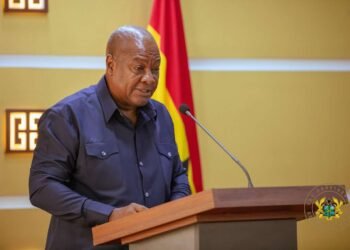

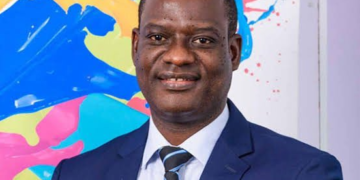
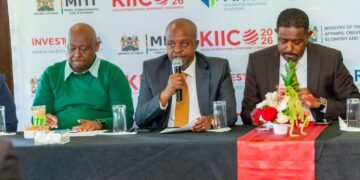
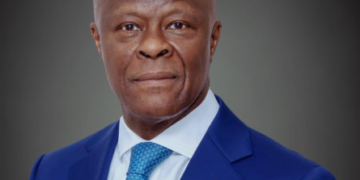
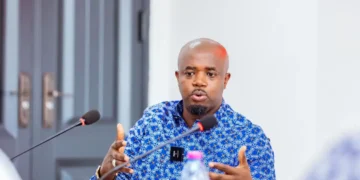




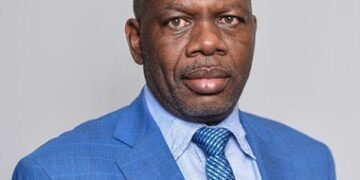


















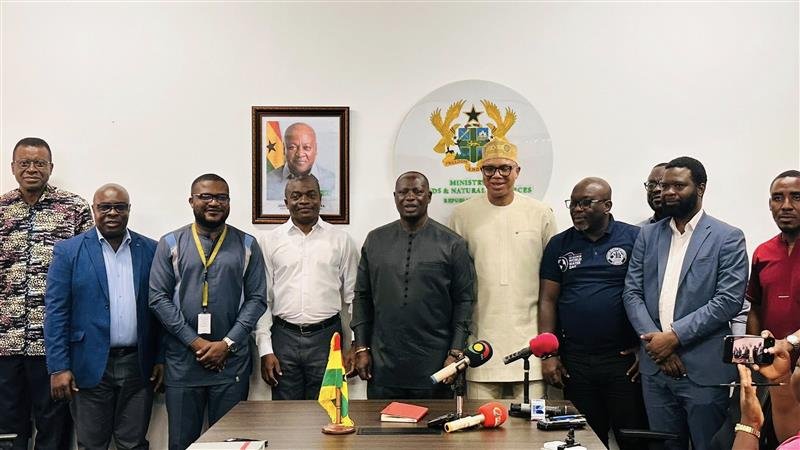
The Minister for Lands and Natural Resources, Mr. Emmanuel Armah-Kofi Buah, has held strategic talks with the Managing Director of Ghana Water Limited (GWL), Mr. Adam Mutawakilu, to enhance collaboration between their institutions in safeguarding the country’s vital water resources and promoting sustainable water production.
The high-level meeting, held in Accra centered on the growing environmental challenges threatening Ghana’s water bodies—particularly the destructive effects of illegal mining (galamsey) on rivers and streams that serve as major raw water sources for domestic and industrial use.

Mr. Buah reaffirmed the government’s commitment to protecting the nation’s water resources and restoring the natural environment through comprehensive reforms, strict enforcement, and innovative sustainability programmes.
He highlighted key initiatives such as the “Tree for Life” afforestation project and the newly launched “Blue Water Guards” programme, both designed to rehabilitate degraded landscapes and mobilize citizen participation in environmental protection.
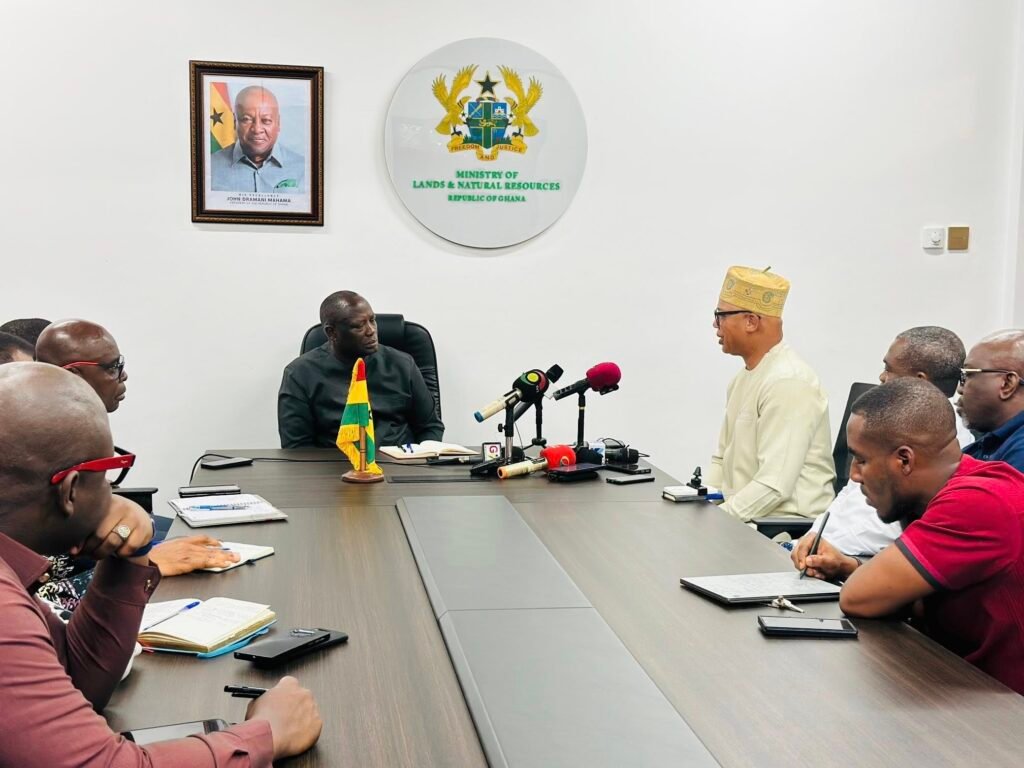
“We have created what we call the Blue Water Guards — patriotic young Ghanaians who believe it is wrong to destroy our rivers and are acting as first responders and intelligence officers to protect them,” Mr. Buah explained.
The Minister further disclosed that reforms are underway within the mining sector to address the root causes of illegal mining and its damaging environmental impact.
READ ALSO:NIGERIA: SENATE CONFIRMS NCC BOARD MEMBERS
According to him, a recent national review of small-scale mining licenses led to the revocation of over 300 licenses found to be irregular.
On his part, Mr. Adam Mutawakilu commended the Ministry’s ongoing efforts, noting that the recent interventions were already yielding measurable improvements in water quality at several treatment plants.
“Yes, it’s getting better. For instance, at Kwanyako, we are back to full capacity, and we can feel the positive impact of your interventions. In the near future, the water bodies will recover, and Ghana Water will be able to provide safe and reliable water to all,” he said.
Despite the progress, Mr. Mutawakilu acknowledged
persistent operational challenges such as siltation and salinity affecting raw water intakes at several treatment facilities. He emphasized the need for continued technical and engineering innovations to overcome these issues.
“Some of our intakes have become heavily silted. The clean water sits at the surface, but our submersible pumps can’t reach it. We’re working to re-engineer and lift them closer to the surface to treat clean water efficiently,” he explained.